Walk into almost any conversation about websites and the first thing people talk about is how the site looks. Colors, fonts, photos, layout. And sure, those things matter. A site that looks outdated or thrown together is not going to inspire much confidence in a potential customer. But here is the reality that a lot of service business owners find out the hard way: a good-looking website that was not built around a real strategy is not going to fill your schedule. It is just going to look nice while leads go to someone else.
At Blume Agency, the approach to building websites for home service businesses starts well before anyone picks a color or chooses a font. It starts with a plan. What does this business actually need? Who are the right customers? What do those customers need to see before they call? What pages need to exist, and what job does each one have to do? The answers to those questions are what shape the most impressive website design, not the other way around.
This post is going to walk through exactly why strategy has to come first, what that looks like in practice, and why service businesses that skip this step tend to stay stuck even after spending real money on a new site.
The Problem With Starting With Visuals
It is easy to understand why so many businesses jump straight to design. Looking at a beautiful website feels good. It feels like progress. You see bold photos, clean sections, a modern layout, and it is hard not to think that if your site looked like that, the phone would start ringing.
The problem is that a site built to look impressive without a clear strategy behind it almost always has the same set of issues. The homepage looks great but does not clearly explain what the company does or where it works. The service pages exist but are vague and do not give Google anything strong to rank. The contact options are buried or confusing. Visitors land on the site from a phone, struggle to find what they need, and leave without doing anything.
That is not a design failure, exactly. It is a planning failure that design cannot fix.
When a website does not convert, business owners often assume they need more traffic. So they spend money on ads and watch those clicks disappear without turning into calls. Or they assume they need a redesign, so they spend money on another new site that looks different but has the same underlying problems. The real issue is never that the site does not look good enough. The real issue is that the site was never built to do a specific job.
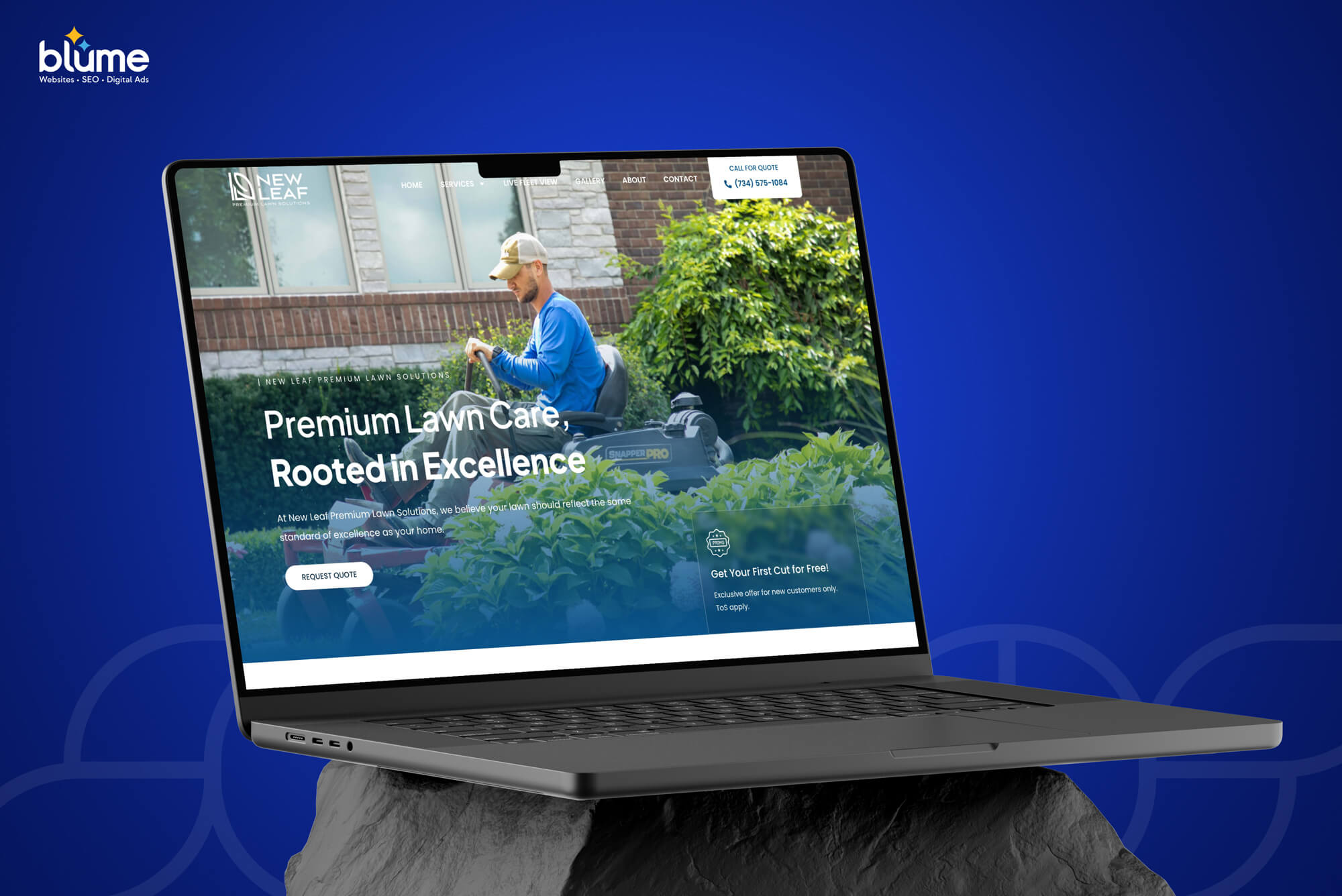
What a Strategy-First Website Actually Looks Like
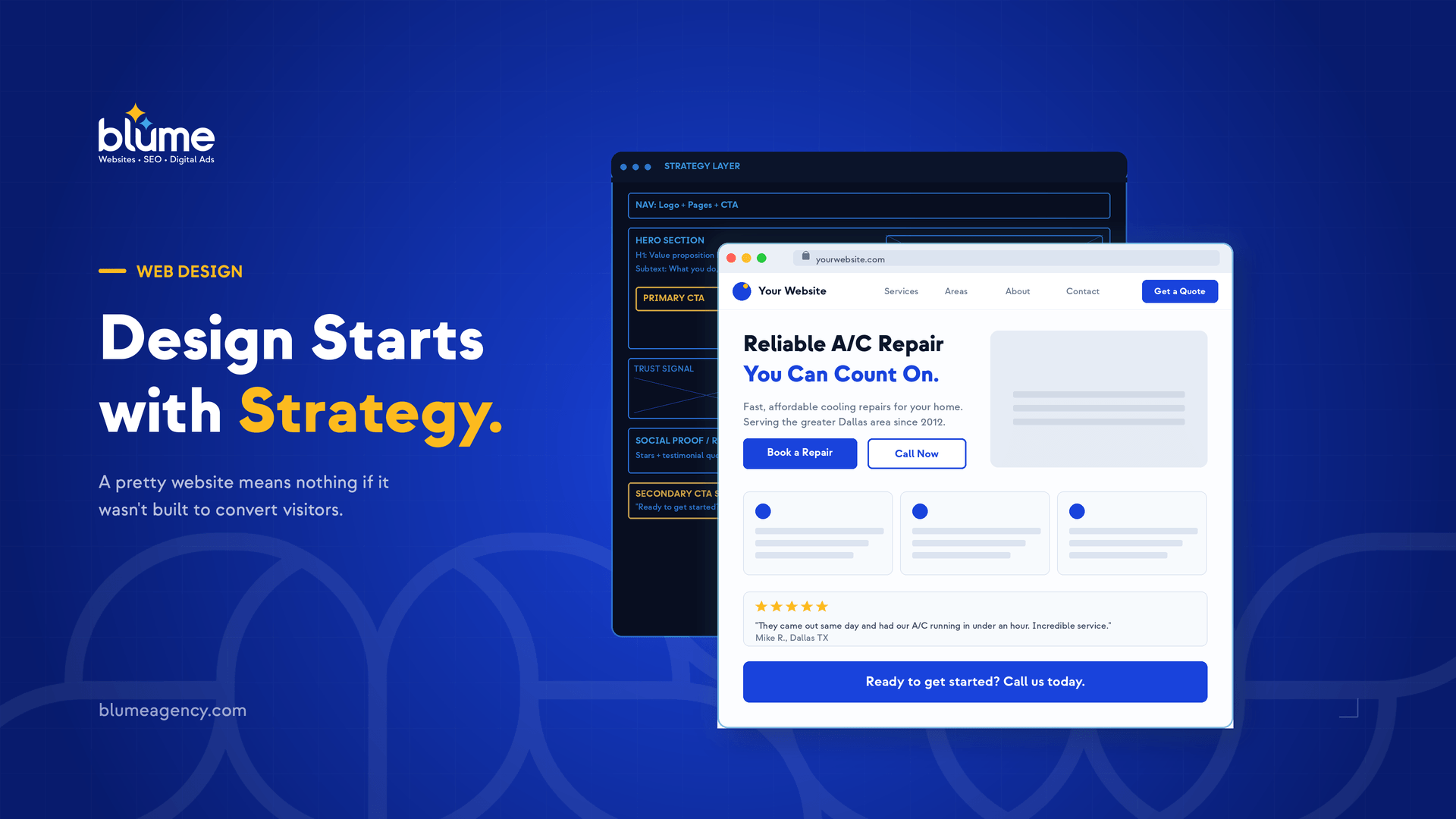
A strategy-first approach means answering the important questions before any design decisions get made. That process shapes everything that comes after it.
Who is the right customer for this business?
This sounds basic, but it makes a real difference in how a site is built. A roofing company that primarily does insurance work after storms needs a completely different message and page structure than a roofing company focused on high-end custom builds. A plumber who wants emergency calls needs different calls to action than a plumber trying to book larger remodel projects. Getting this clear upfront means the site speaks directly to the people who are most likely to hire you rather than trying to say something for everyone and landing with no one.
What does a visitor need to know right away?
Most people who land on a service business website are not going to read every word on every page. They scan. They are looking for a few key pieces of information fast. What does this company do? Do they serve my area? Can I trust them? How do I get in touch? If the site does not answer those questions in the first few seconds, the visitor is gone.
A strategic site is laid out with that behavior in mind. The most important information is visible immediately. Trust signals like reviews and proof of work are placed near the points where visitors are making a decision. Contact options are easy to find and easy to use, especially on a phone.
What is the purpose of each page?
Every page on a well-built site has a specific job. The homepage might be built to capture broad local searches and push visitors toward service pages. Each service page might be optimized for a specific search term and built to drive a call or a form fill. Location pages, which we cover in depth in our post on how Areas We Serve pages help you show up in search results, are built specifically to rank for city-level searches and connect local customers to the business.
When each page has a defined purpose, the site works as a system rather than a collection of pages that look similar but do not connect to any clear goal.
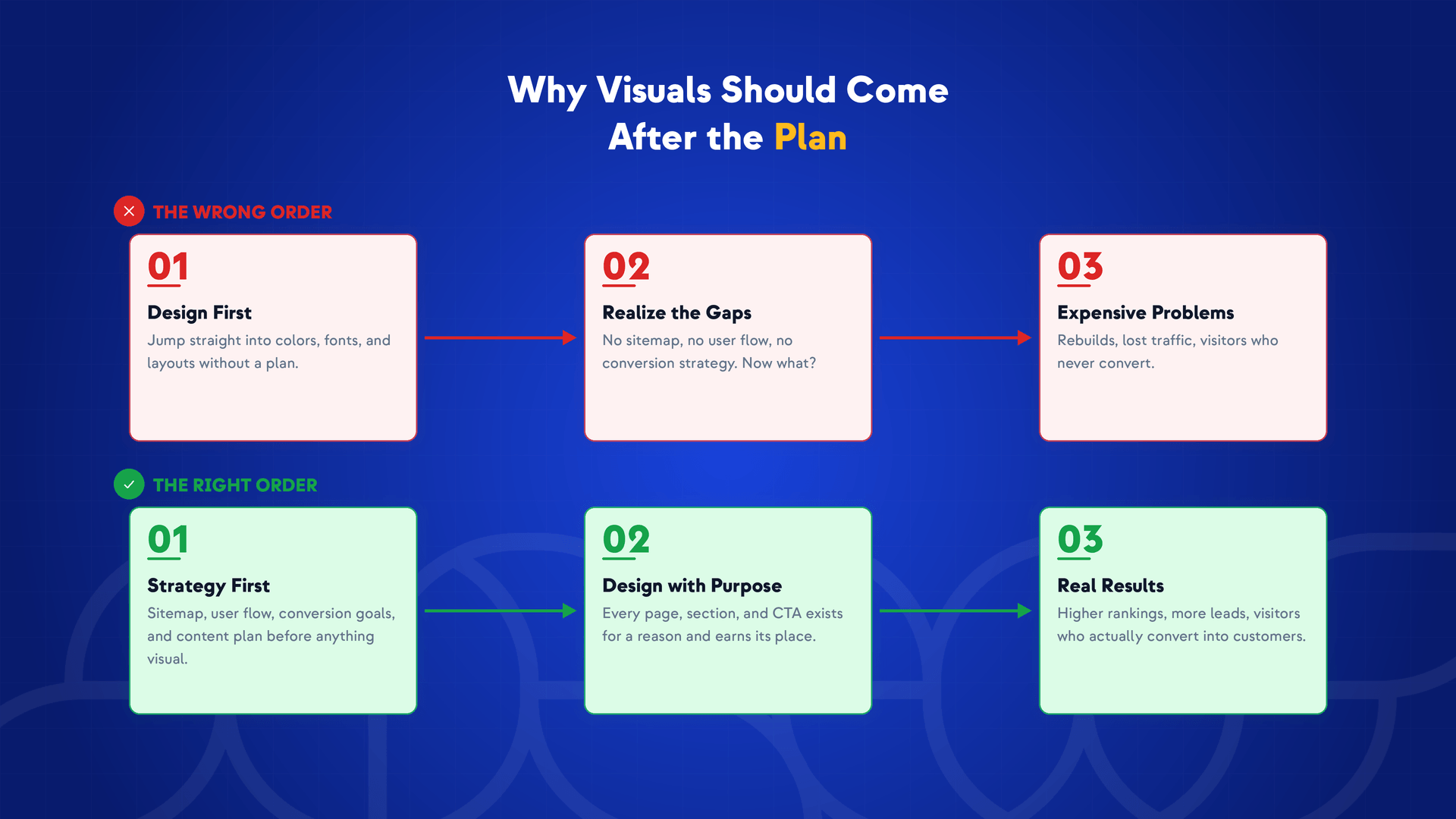
Why Visuals Should Come After the Plan
Once the strategy is clear, design becomes a tool for supporting it rather than something that exists on its own. The visuals should reinforce the message, make the right information easy to find, and guide the visitor toward the next step without getting in the way.
That means the design of the most impressive website is not about what looks impressive on a design portfolio. It is about what makes a busy homeowner feel confident enough to call. A clean, fast, easy-to-use site with clear messaging and strong trust signals will outperform a visually elaborate site with weak structure almost every time.
Speed is a good example of this. A site loaded with large images, heavy animations, and design-heavy elements that take too long to load on a phone is working against itself. Most people searching for home service businesses are on a mobile device, often while they are dealing with the very problem they need help with. If the site takes more than a few seconds to load, they are gone. A strategic website treats performance as part of the design rather than an afterthought.
The Connection Between Website Strategy and Lead Generation
A well-built website does not just look professional. It actively supports the ways a business brings in new customers, whether that is through organic search, paid ads, or both.
From an SEO standpoint, the structure of the site matters as much as the content on it. Pages need to be organized in a way that helps Google understand what the business does and where it operates. Service pages need to be built around the specific searches customers are using. Location pages need to target the right cities with real, original content rather than thin placeholder pages. All of that is strategy, and none of it shows up in a design mockup.
From a paid ads standpoint, traffic is only as valuable as the page it lands on. A Google Ads campaign that drives visitors to a homepage with no clear path forward is burning money. The right setup pairs targeted ad campaigns with landing pages built specifically to convert that traffic, which means the message in the ad matches the message on the page and the next step is obvious. Our post on how to convert website visitors into customers gets into more detail on exactly how that conversion piece works.
When the website, the SEO strategy, and the paid ads are all built to work together from the start, the whole system is more efficient. Less money gets wasted, and more of the traffic that comes in actually turns into calls and booked jobs.
What Service Businesses Lose When They Skip Strategy
The costs of skipping strategy and going straight to design tend to show up in predictable ways.
Leads stay flat even after a redesign. This is probably the most common frustration. A business invests in a new website, it looks better than the old one, and the phone still does not ring any more than it did before. That usually comes down to the fact that the new site was built to look different rather than to function differently.
Ad spend does not produce a real return. Paid traffic hitting a site without strong landing pages, clear calls to action, and a fast mobile experience is going to convert poorly no matter how well the campaigns are set up. A strategic website fixes the conversion side of the equation so that ad spend actually produces something.
The site cannot grow with the business. A site that was built around visuals rather than structure tends to get unwieldy over time. Adding new service pages, building out location pages for new areas, or supporting a more aggressive SEO strategy becomes harder because the foundation was never built with that kind of growth in mind.
Google has a hard time understanding the site. A well-structured site built around real SEO fundamentals gives Google clear signals about what the business does and who it serves. A site built primarily around design often lacks the structure, content depth, and page organization that search engines need to rank it well.
Specific Design Elements That Work Better With Strategy Behind Them
There are certain parts of a website that look similar across a lot of service business sites but perform very differently depending on whether strategy shaped how they were built.
The hero section at the top of the homepage. A lot of sites use this space for a large background photo and a general tagline. That is fine visually, but a strategic hero section immediately communicates what the business does, where it operates, and what the visitor should do next. That shift in focus, from looking impressive to saying something useful, can make a meaningful difference in whether visitors stick around or leave.
Service pages. A site might have a services menu that lists everything the business offers, but if those services all live on a single page or are spread across pages with thin content, the site is missing a significant SEO opportunity. Each major service deserves its own dedicated page built around what customers are actually searching for. That is both a design decision and a strategy decision, and it needs to be planned before the site is built, not added on later.
Location pages. For any home service business covering more than one city or town, dedicated location pages are one of the most important parts of the site. These are not just pages with a city name swapped in. They are individual pages built to rank for local searches in each area the business serves. Blume builds these into every site that needs them, and they are a core reason why clients consistently see growth in organic traffic after launch. You can see the markets Blume serves on our areas we serve page, including a dedicated page for web design in New Orleans.
Trust signals near decision points. Reviews, photos of completed work, and real results from past clients should show up where visitors are making their decision, not just on a dedicated testimonials page that most visitors never find. Placing this kind of proof near contact forms, service descriptions, and pricing sections gives it far more impact.
Contact and conversion paths. A strategic site makes it easy to take action from anywhere on the page. Tap-to-call buttons, visible phone numbers, quote request forms that are not buried, and sticky headers that keep contact options accessible as visitors scroll all reduce the friction between a visitor and a call. These are not flashy design features, but they directly affect how many visitors actually convert.
Real Numbers That Back This Up
Strategy-first website design is not just a theory. The results Blume has produced for home service businesses demonstrate what happens when a site is built the right way from the start.
Paine Excavating saw a 216% increase in leads within the first 30 days of launching with Blume. HUDCO Roofing saw a 190% average increase in total leads, with strong improvement in both paid search and Local Service Ads performance. Duggan’s AC and Heating added more than 220 booked jobs year over year.
These businesses did not just get prettier websites. They got sites built around a clear plan for who their customers are, what those customers need to see, and what action the site should drive. The design supported that plan. That is why the numbers moved the way they did.
Matching the Right Level of Support to Where Your Business Is
Not every service business needs the same scope of work, and part of a strategic approach is recognizing that.
The Foundation package is a strong fit for smaller operations or newer businesses that need a solid, professionally built website with Google Ads management, lead tracking, and reporting. It gets the core pieces in place without overbuilding for a business that is still establishing itself.
The Growth package is built for businesses that are ready to push harder on SEO services, content, and consistent lead flow alongside a premium website. This is where a more aggressive local search strategy starts to compound over time.
The Expansion package is for businesses that want to dominate their market. More content, stronger backlink support, and a full digital marketing system working together across multiple service areas.
You can see the full breakdown of what each level includes on our packages page.
FAQ: Website Design Strategy for Service Businesses
Why does strategy need to come before design?
Because design is a tool for communicating something, and if you do not know what you are trying to communicate or who you are communicating it to, the design has no real direction. Strategy answers those questions first so the design has a job to do rather than just something to look at.
Can a good-looking site hurt my SEO?
A site that prioritizes visuals over structure can absolutely hurt SEO. Heavy image files slow load times, which is a ranking factor. Thin or missing content leaves search engines without enough signal to rank the site well. Poor page structure makes it harder for Google to understand what the business does and where it operates. Good design and strong SEO are not at odds, but they have to be planned together from the start.
What is the difference between a strategic website and a template?
A template gives you a framework that was built for no one in particular. It might look clean or modern, but it was not built around your services, your customers, your service area, or your goals. A strategic website is built around all of those things from the start, which means the structure, content, and design all point in the same direction.
How does website strategy affect my Google Ads results?
Paid traffic is only as valuable as the page it lands on. If ads are sending visitors to a homepage that is not built to convert, a lot of that budget disappears without producing calls. A site built with paid traffic in mind has landing pages matched to specific campaigns, clear calls to action, and a fast mobile experience that keeps paid visitors from bouncing immediately.
How long does it take to see results from a strategically built website?
Some results show up quickly, especially with paid ads running to well-built pages. Organic results through SEO typically build over three to six months, with momentum continuing to grow over time. The businesses that see the biggest long-term returns are the ones that invest in both the site and the ongoing SEO strategy together rather than treating the website as a one-time project.
Does Blume work with businesses outside of Louisiana?
Yes. Blume works with home service businesses across the country. You can check the full list of markets on our areas we serve page to see if your area is covered.
What if my current website just needs some fixes rather than a full rebuild?
That depends on how the current site is structured. Sometimes a targeted set of improvements can make a real difference. Other times the underlying structure of the site is the problem, and building on a weak foundation only delays better results. Blume can take a look at what you have and give you an honest read on what makes sense.
Wrapping It Up
The most impressive website design is not the one that wins design awards or looks the best in a screenshot. It is the one that generates consistent calls, booked jobs, and qualified leads for a service business that needs those things to grow.
That kind of website starts with a real strategy, not a mood board. It is built around the right customers, the right message, and a clear path from visitor to paying client. The visuals support that plan rather than driving it.
If your current site looks fine but the leads are not there, or if you are tired of paying for ad clicks that go nowhere, the issue is almost certainly strategy, not aesthetics. Blume builds websites for home service businesses that are designed to work, not just designed to look good.
When you are ready to build something that actually performs, we are ready to get started. Let’s Blume.