If you have ever been told that the more times you put a keyword on your page, the higher it will rank, you were given bad advice or even worse, are participating in black hat SEO. That thinking made sense back in the early days of Google, before search engines got smart enough to figure out what you were doing. Today, stuffing your pages with keywords does not help you rank. It actually makes things worse, and in some cases, it can get your website penalized entirely.
At Blume Agency, we work with home service businesses every day, and keyword stuffing is one of the most common mistakes we see when we audit a new client’s website. A plumbing company with “plumber Baton Rouge” crammed into every paragraph. A roofing contractor with the same keyphrase repeated so many times that the page reads like a broken record. A fence company that copied the same keyword into their title, their headings, their first paragraph, their middle paragraph, and their footer, all hoping Google would reward the repetition.
It does not work that way, and this post is going to explain exactly why, what Google actually wants from your content, and where those keyphrases you are trying to rank for actually belong.
What Keyword Stuffing Actually Means
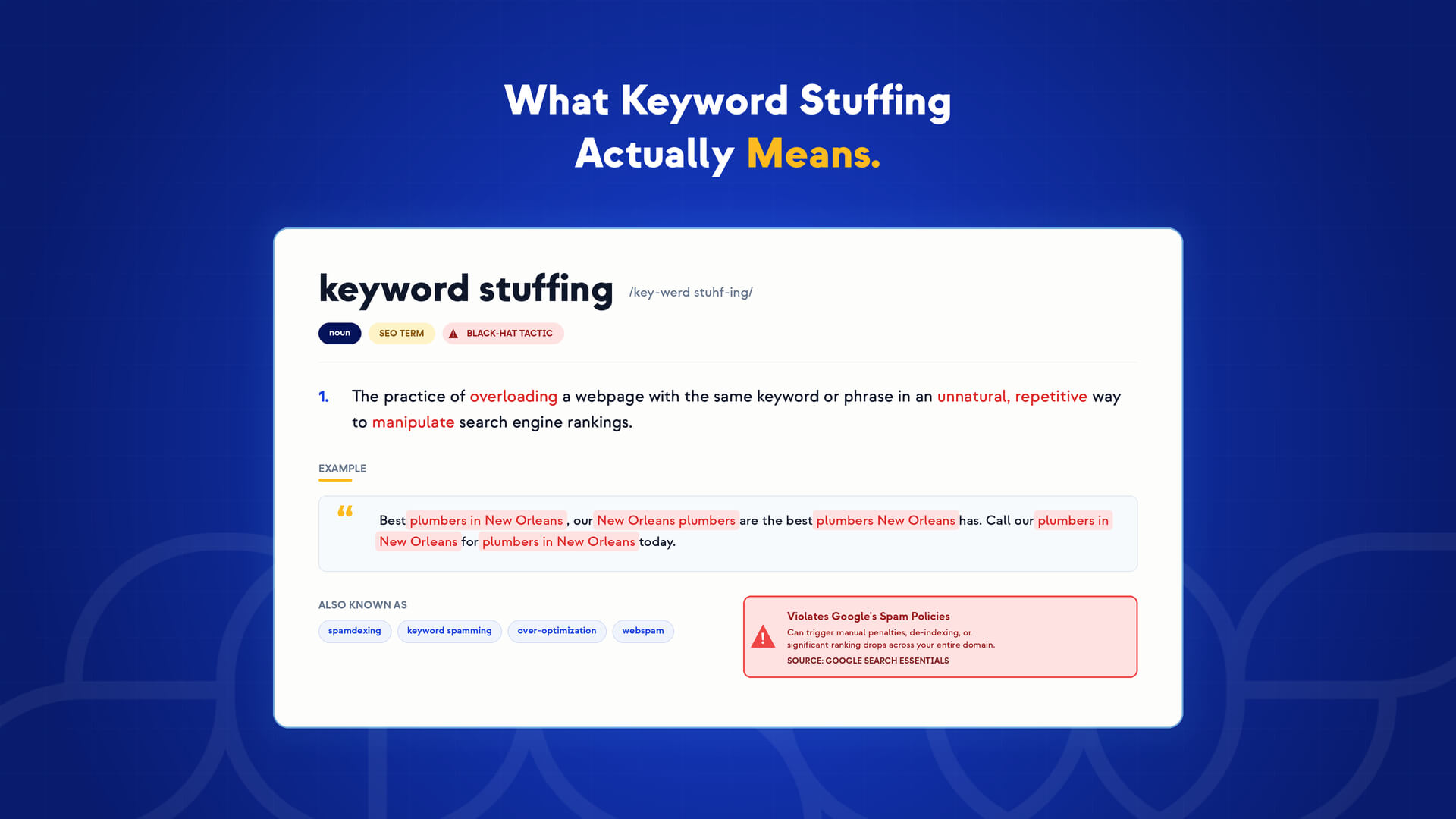
Keyword stuffing, aka spamdexing/keyword spamming/over-optimization is exactly what it sounds like. It is the practice of loading a web page with a specific keyword or phrase over and over again in an attempt to manipulate search rankings. Sometimes it shows up in the visible text on the page. Other times, businesses try to hide it by making the text the same color as the background or burying it in the page code where visitors cannot see it.
Either way, Google catches it. The search engine has gotten extremely good at recognizing when a page is trying to game the system rather than actually provide useful information to the person reading it.
Here is a quick example of what keyword stuffing looks like in the real world:
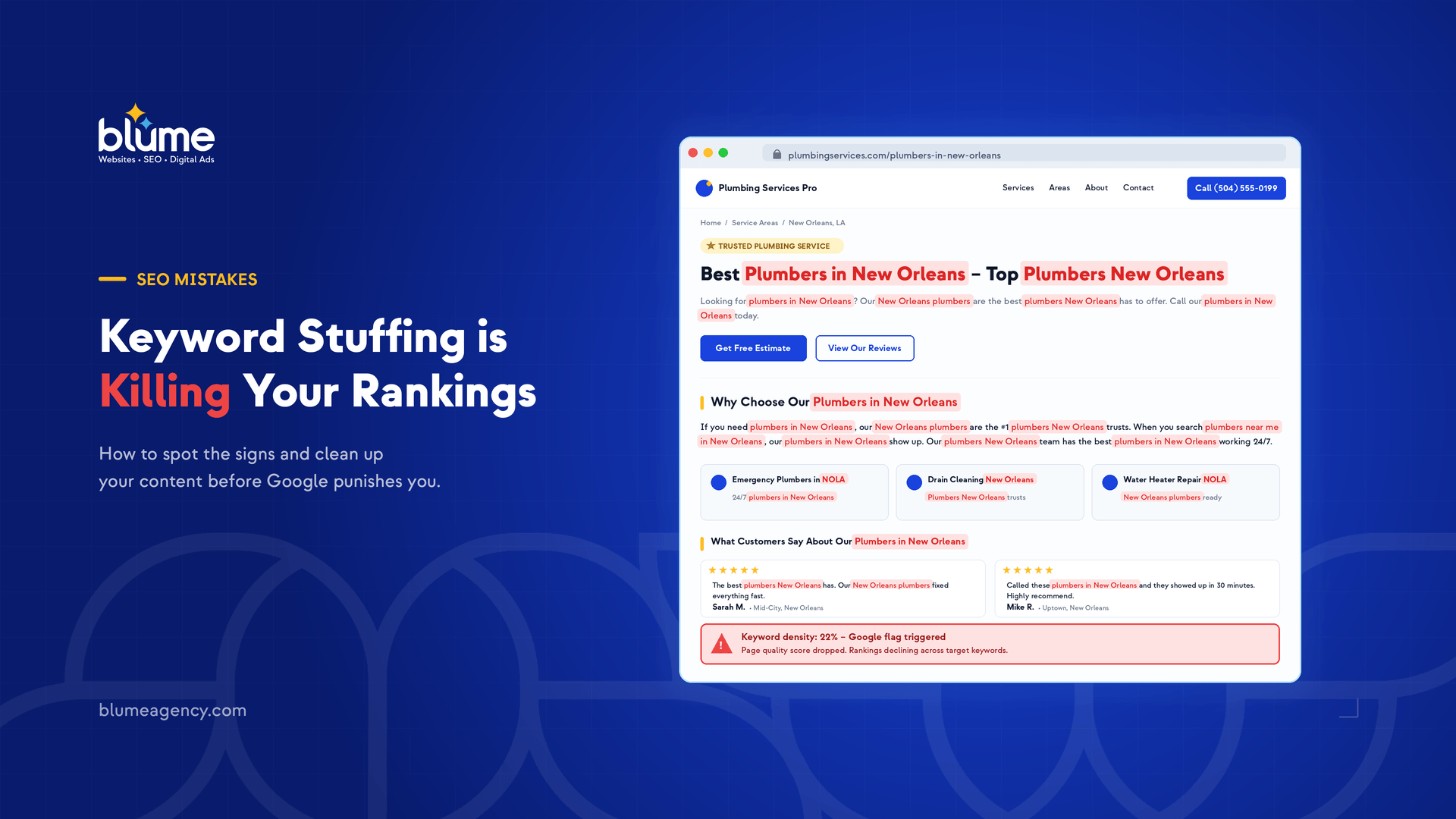
“If you are looking for an HVAC contractor in Memphis, our Memphis HVAC contractor team is the best Memphis HVAC contractor you will find. Our Memphis HVAC contractor services cover all of Memphis and the surrounding Memphis area.”
Reading that makes your head hurt. A real person would never write that sentence. It sounds robotic, it provides no actual value to the reader, and Google knows exactly what is happening. Instead of rewarding that page with a higher ranking, the search engine either ignores the page entirely or actively downgrades it.
Why Keyword Stuffing Hurts Your Search Rankings
Google’s entire job is to give searchers the best possible answer to whatever they typed in. When someone searches for “AC repair near me,” Google wants to serve up the most relevant, trustworthy, and genuinely helpful results it can find. A page that is crammed with keywords but offers no real information does not help that searcher at all, so Google does not reward it.
Over the past decade, Google has released several major algorithm updates specifically designed to penalize low-quality, keyword-heavy content. The Panda update, the Helpful Content update, and several others were all aimed at pushing useful, well-written pages up in the rankings while pushing thin, manipulative content down.
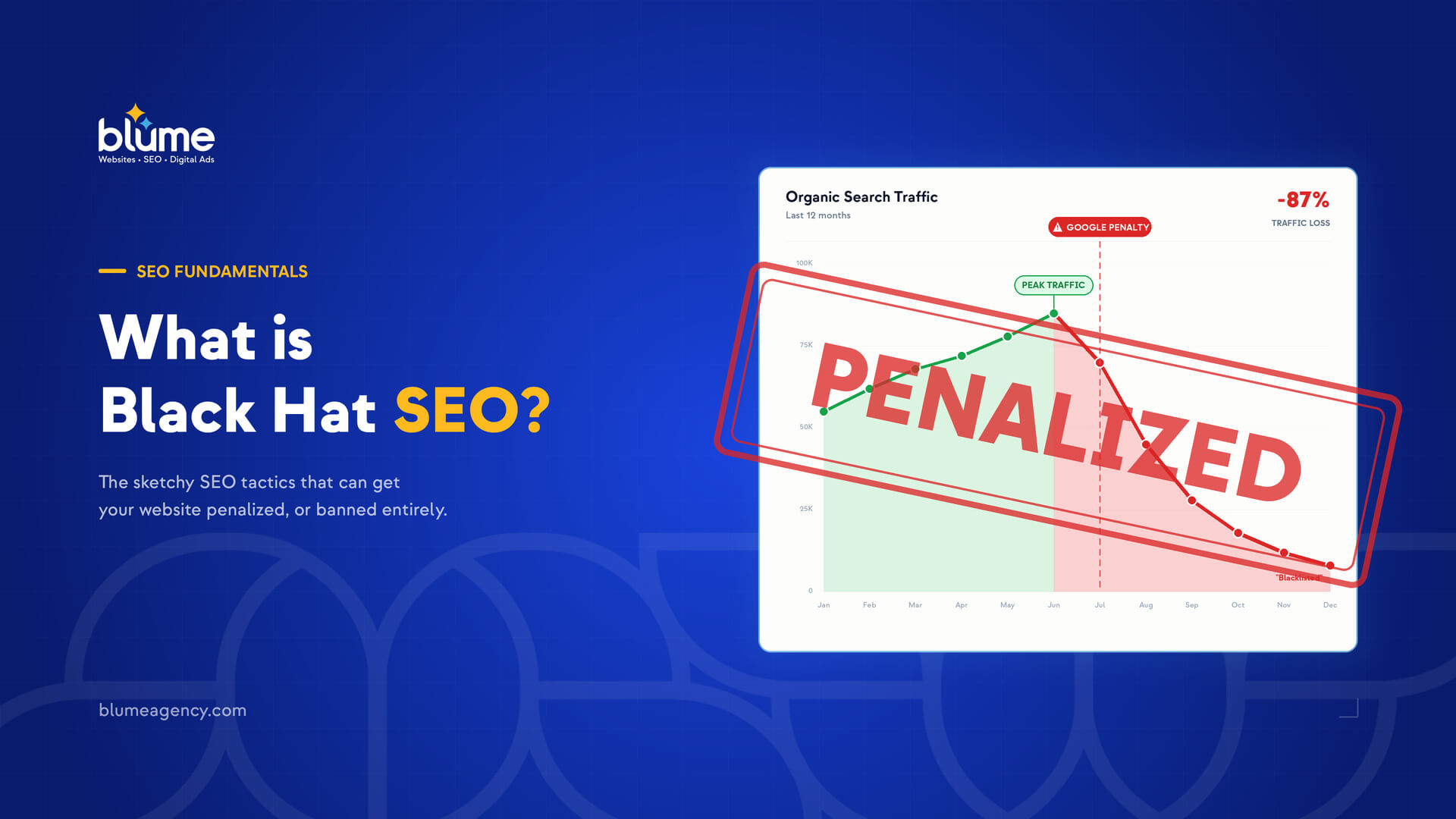
According to Google’s own spam policies, keyword stuffing is listed explicitly as a practice that can result in manual action against your site. That means a real person at Google reviews your website and decides it should not rank at all. Recovering from a manual penalty is a long, slow process that most businesses never fully come back from.
Beyond the penalty risk, keyword-stuffed pages tend to have terrible conversion rates even when they do get some traffic. When a real customer lands on a page that reads like a keyword list, they leave immediately. A high bounce rate tells Google that visitors are not finding what they need on that page, which only makes the ranking problem worse over time.
What Google Actually Wants Instead
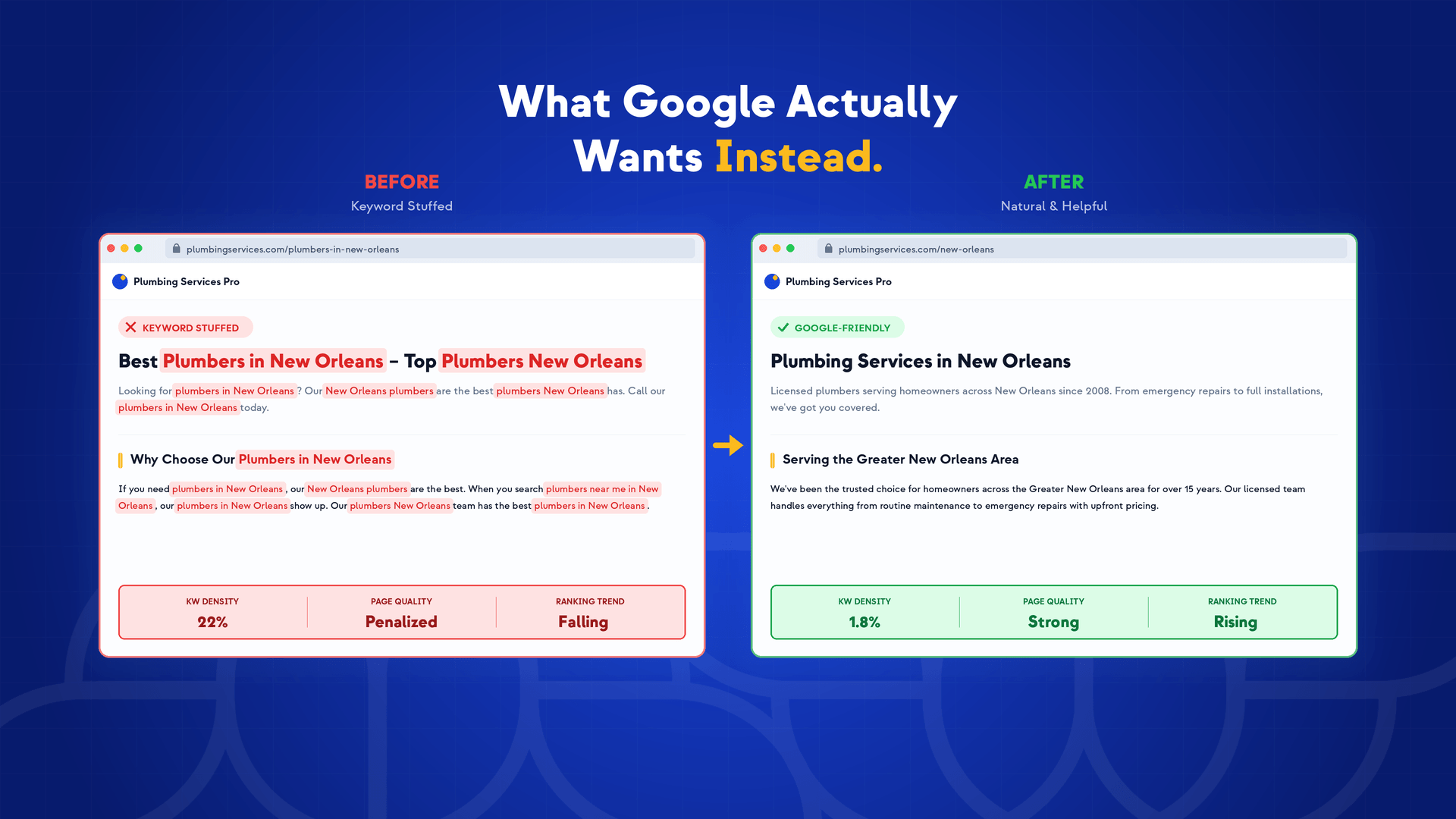
Google rewards pages that are written for people, not for search engines. That might sound like a simple idea, but a lot of businesses struggle to put it into practice because they are so focused on rankings that they forget about the actual human being on the other side of the screen.
What does a well-optimized page look like? It covers a topic in enough depth that a reader learns something useful. It answers real questions that customers actually ask. It uses keywords naturally, the way a knowledgeable person would use them in a real conversation, not repetitively jammed into every other sentence. It is organized with clear headings so both readers and search engines can follow along easily.
The goal is to write content that is genuinely worth reading. When you do that, keywords tend to show up naturally anyway because you are writing about the topic and the keywords are part of that topic. You do not have to force it. In fact, forcing it is exactly what gets businesses in trouble.
A good SEO strategy uses variations of a keyphrase throughout a piece rather than repeating the exact same string of words over and over. If your main keyword is “emergency plumber Houston,” a well-written page will also naturally include phrases like “24-hour plumbing service,” “urgent pipe repairs,” and “plumbing emergency in Houston” without anyone consciously trying to cram them in. That kind of variety signals to Google that the page is covering a topic thoroughly rather than gaming a specific phrase.
The Real Problem: Putting the Wrong Keywords on the Wrong Pages
Here is something that goes beyond just keyword stuffing. A lot of the time, businesses are not just overusing keywords. They are putting them on the wrong pages entirely.
Say you are a roofing company in Nashville. You serve Nashville, Brentwood, Franklin, Murfreesboro, and Hendersonville. You want to rank for searches in all of those cities. So you add all five city names to your homepage, your about page, your services page, and anywhere else you can think of. You figure that if you mention all those cities enough times, Google will associate your business with all of them.
That is not how it works, and it is actually one of the most common variations of keyword stuffing that we see from contractors and home service businesses.
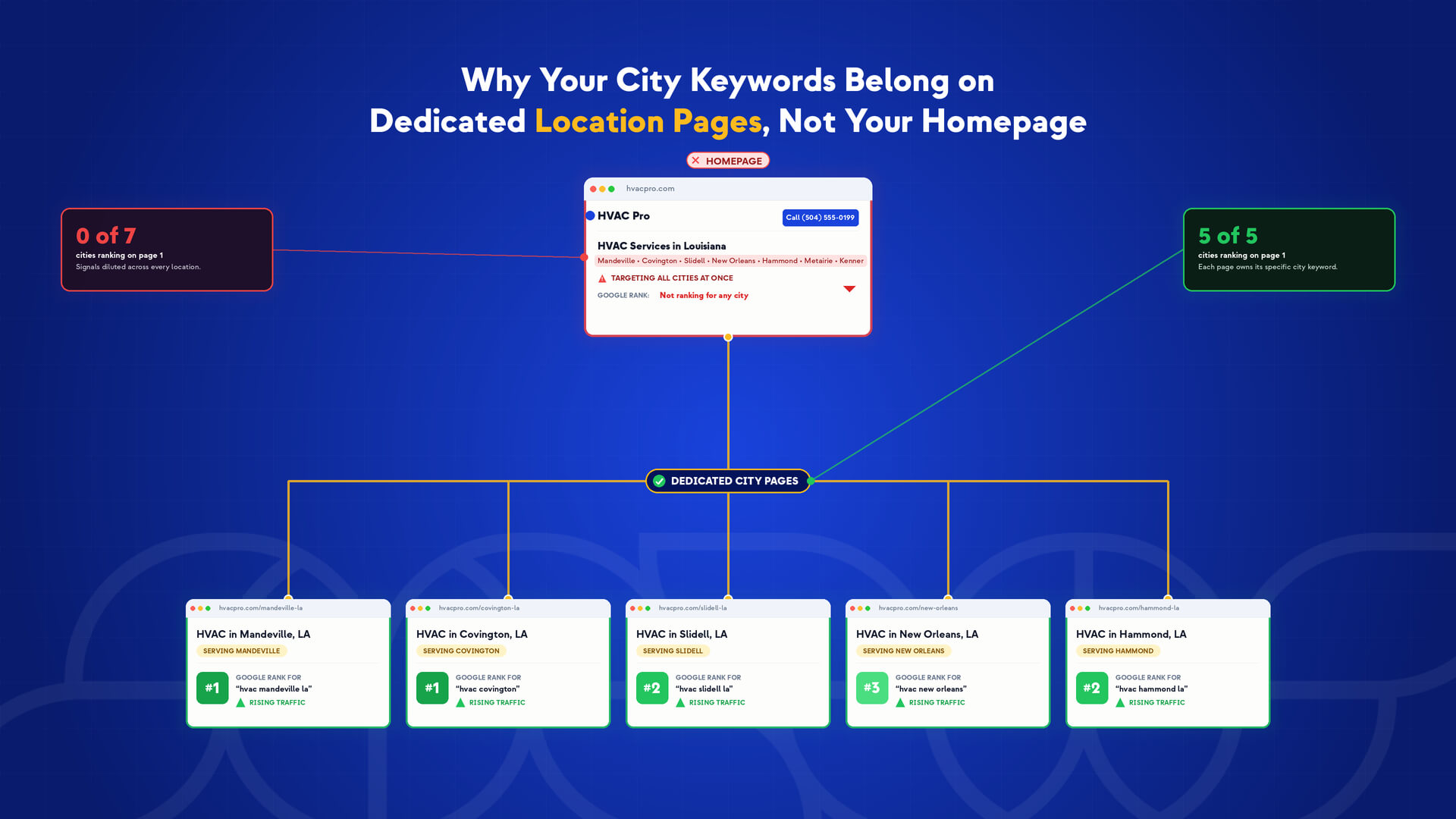
When you try to target five different cities on one page, you are essentially telling Google that the page is relevant to all of them equally, which means it is not specifically relevant to any of them. You end up ranking poorly for every location instead of strongly for one.
The right approach is to give each city its own dedicated page, optimized specifically for searches in that area. That is where keywords related to a specific city or service area actually belong, on their own pages, with their own content written specifically for that location.
Why Your City Keywords Belong on Dedicated Location Pages, Not Your Homepage
This point is important enough that it deserves its own section, because it is the piece most service businesses get completely wrong.
If you want to rank for “plumber Covington LA” and “plumber Mandeville LA” and “plumber Slidell LA,” you cannot accomplish all three of those goals on a single page. Each one of those searches represents a different group of people in a different city looking for a local service provider. Google wants to serve the most locally relevant result it can find for each one of those searchers.
When your website has a dedicated page for Covington that is specifically written about your plumbing services in Covington, that page has a real shot at ranking when someone in Covington runs that search. The same goes for Mandeville and Slidell. Each page does a specific job for a specific audience.
This is exactly why we wrote a full guide on how Areas We Serve pages help you show up in search results. If you have not read that yet, go through it after this one. It covers the full picture of how to build location pages the right way and what that kind of setup actually does for your lead volume.
The short version is this: all those city-specific keyphrases you are tempted to stuff into your homepage? They each deserve their own page. Not a list of cities in your footer. Not a paragraph on your about page that mentions fifteen towns by name. A real, dedicated page for each location with real content written specifically for that audience.
When Blume builds custom websites for home service businesses, we always structure the site with location pages built in from the start. We do not treat them as an afterthought. They are a core part of how the site is designed to generate leads over time, and they are what allows your keyphrases to do their actual job without creating a stuffing problem on your main pages.
Signs Your Website Might Have a Keyword Stuffing Problem
Not every business that has this issue knows about it. Sometimes it happened years ago when someone built the site and thought they were doing the right thing. Here are a few signs that your website might be working against you because of keyword-heavy content.
Your pages do not read naturally. If you pull up one of your service pages and read it out loud, does it sound like something a person would say? If certain phrases show up so often that they feel forced or awkward, that is a red flag. Real customers notice this, and so does Google.
You are targeting multiple cities on a single page. If your homepage or services page includes a long list of city names, either in the main text or in a section toward the bottom, you are likely diluting your local relevance rather than building it. That content belongs on dedicated location pages where it can actually do some work.
Your rankings have dropped over time even though you have not changed anything. Algorithm updates roll out regularly. If your site was built on keyword-heavy tactics, a recent update may have already started pushing your pages down in the rankings without you realizing why.
Your traffic has stayed flat or declined despite consistent content. If you have been adding content to your site but not seeing any improvement in traffic or calls, the quality of that content might be the issue. More content built on the same keyword-stuffing approach is not going to fix a keyword-stuffing problem.
How Blume Fixes This for Service Businesses
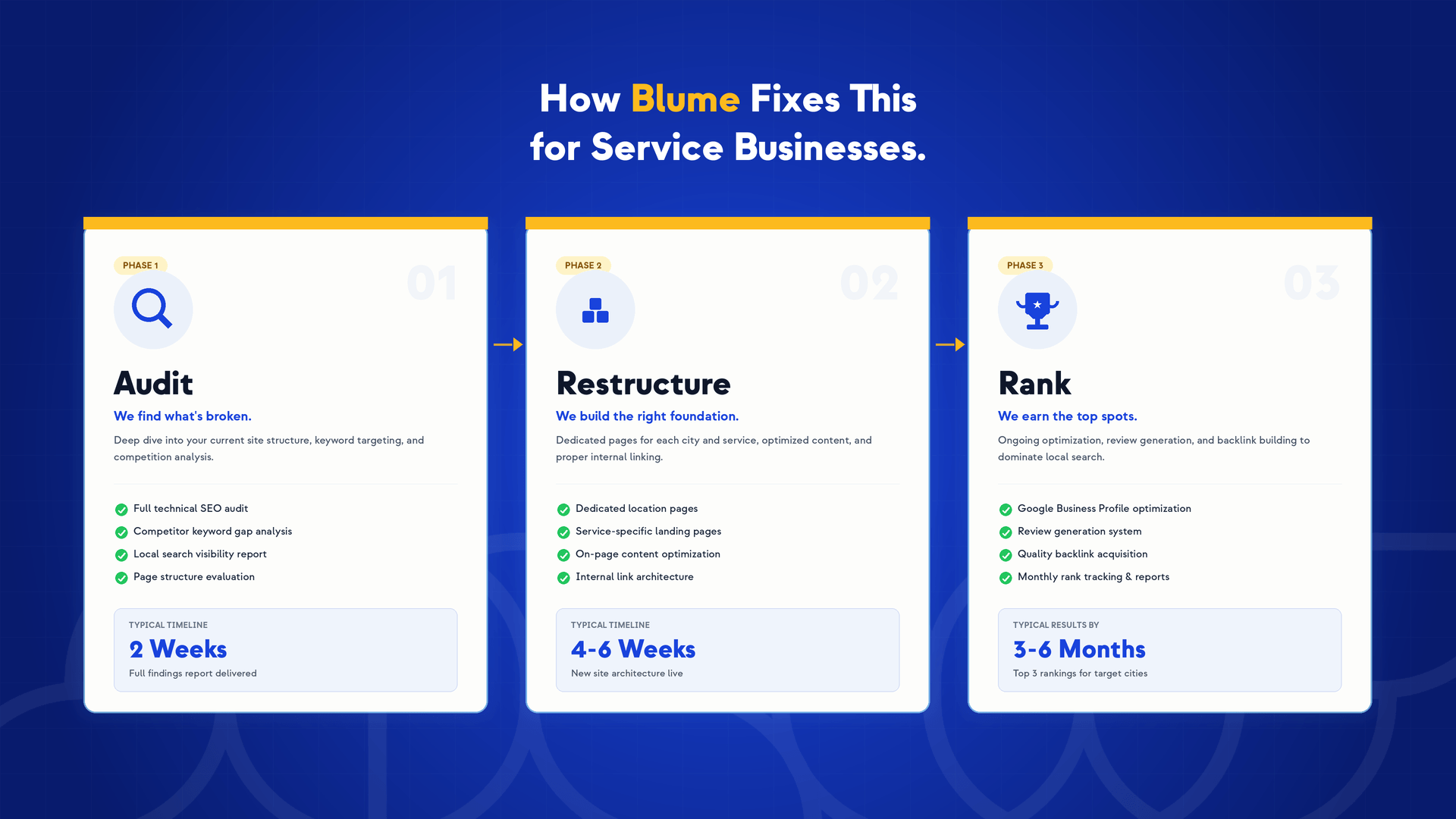
When a new client comes to Blume and their website is underperforming, a content and keyword audit is one of the first things we do. We look at how keywords are being used across the site, where thin or stuffed content is showing up, and whether the overall structure of the site is actually set up to rank for local searches.
From there, we clean things up. That means rewriting pages so they are genuinely useful and naturally optimized. It means building out a real location page strategy so city-specific keywords have the right home. It means getting the technical side of the site in order so Google can crawl and index everything correctly. And it means setting up a content approach that builds authority over time rather than trying to trick the algorithm.
HUDCO Roofing came to Blume with an online presence that was not generating consistent leads. After rebuilding their site and SEO strategy the right way, they saw a 190% increase in leads. A big part of that came from cleaning up how their pages were structured and making sure their content was serving real searchers rather than trying to game keyword counts.
Paine Excavating saw a 216% increase in leads after Blume overhauled their digital presence. Again, getting the content strategy right, including building location pages that did the job their homepage was never meant to do, was a central piece of those results.
Duggan’s AC and Heating saw more than 220 additional booked jobs after their SEO was rebuilt from the ground up. Quality content, proper structure, and the right keywords on the right pages made all the difference.
What a Healthy Keyword Strategy Actually Looks Like
Good SEO is not about how many times you can say a phrase. It is about covering a topic well enough that Google trusts your page to answer a searcher’s question better than anyone else. Here is what a solid approach looks like in practice.
One primary keyword per page, with supporting variations. Every page on your site should have one main thing it is trying to rank for. That might be “water heater replacement Dallas” or “gutter installation Columbus Ohio.” From there, you naturally include related phrases throughout the page without forcing the exact match phrase in over and over.
Keywords in the right places, not everywhere. Your primary keyphrase should show up in your page title, your main heading, and within the first paragraph of content. After that, use it naturally where it fits and rely on related terms to fill out the rest of the page. There is no magic number for how many times to use a keyword, but if you are counting, you are probably overthinking it.
Location keywords on location pages. This one cannot be said enough. If you want to rank for your service in a specific city, build a page for that city. Trying to target multiple cities from one page waters down your relevance for all of them. Dedicated location pages are the right tool for the job, and they are one of the most straightforward ways to expand your local search presence across your entire service area.
Content that answers real questions. Think about what your customers actually ask before they call you. What do they want to know? What worries them about hiring someone for the job? Write content that answers those questions clearly and specifically. That kind of content earns rankings because it earns trust.
The Right Package to Get Your SEO on Track
If your website is struggling with keyword stuffing, thin content, or a location page strategy that does not exist yet, Blume has options that fit businesses at different stages.
The Foundation package is a great starting point for smaller operations or solo contractors who need a clean, properly optimized website with the right structure in place to start competing in local search.
The Growth package is for businesses that are ready to build momentum. You get ongoing SEO work, a real location page strategy, and content built to keep improving your rankings over time rather than staying flat.
The Expansion package is for businesses that want to own their market. This is the full picture, combining aggressive SEO with paid advertising through Google Ads to cover both organic and paid search results at the same time.
Take a look at our packages page to see what fits where your business is right now. And if you are not sure which one makes sense, reach out and we can talk through it.
FAQ: Keyword Stuffing and SEO for Service Businesses
How many times should I use a keyword on a page?
There is no exact number, and chasing a specific count is part of what gets businesses in trouble in the first place. A good rule of thumb is that if you read the page out loud and the phrase feels forced or repetitive, it has been used too many times. Write naturally, include your primary phrase in your title and opening paragraph, and let supporting variations carry the rest of the page.
Can Google actually tell when I am stuffing keywords?
Yes, without question. Google’s algorithms are trained to recognize patterns in text, and keyword stuffing is one of the oldest patterns in the book. The search engine is far better at detecting unnatural language than most people realize. And beyond the algorithm, there is a manual review process that can result in a direct penalty if Google flags your site.
What is the difference between good SEO and keyword stuffing?
Good SEO is when your keywords appear naturally in content that is genuinely useful to the reader. Keyword stuffing is when you are repeating a phrase so often that it disrupts the readability of the page and offers no real value beyond trying to influence rankings. The line between the two is usually pretty clear when you read the content as a normal person rather than as someone counting keyword appearances.
Why should city keywords go on location pages instead of my homepage?
Your homepage can only target one location effectively. If you serve ten cities and try to rank for all ten from your homepage, you split your relevance across too many targets and end up ranking well for none of them. Each city you want to rank in deserves its own page. That is the only way to give each location the focused, specific content it needs to compete in local search results. Our blog post on how Areas We Serve pages help you show up in search results covers this in detail.
Can a keyword stuffing penalty be fixed?
It can, but it takes time and real work. Recovering from a Google penalty requires cleaning up the content across your site, sometimes completely rewriting pages, and submitting a reconsideration request if the penalty was manual. Blume can help businesses recover from this situation, but it is far better to get things right from the start than to spend months undoing damage.
Does this apply to small businesses or just big companies?
It applies to every website regardless of size. Google does not give small businesses a pass on quality. If anything, small and mid-sized businesses in competitive local markets need to be even more thoughtful about their content because they are competing directly with larger companies that have bigger budgets. Clean, well-organized content is one of the best tools a smaller operation has for standing out.
What if my current website has keyword stuffing built into the design or template?
That is more common than you might think. Some web templates include footer sections that repeat city and service keywords in ways that look natural in the design but read as spam to Google. If your site was built with a pre-made template or was designed by someone without a real SEO background, an audit is a smart investment. Blume can take a look at what is working and what is working against you.
Wrapping It Up
Keyword stuffing does not help you rank. It hurts you, and in some cases, it can get your website penalized in a way that takes a long time to recover from. The businesses that consistently show up at the top of local search results are not the ones that repeated their keywords the most. They are the ones that built pages with real content, clear structure, and a smart approach to where each keyphrase belongs.
If your city and service keywords are all crammed onto a single page, that is not an SEO strategy. That is a problem waiting to be noticed by Google. The right move is to give those keyphrases dedicated location pages where they can rank on their own terms rather than competing with each other for the same real estate.
That is what Blume builds for home service businesses every day. Clean websites, proper SEO, and a location page strategy that puts the right content in front of the right people in the right cities. We work with service businesses across the country and we know what it takes to get a contractor’s website performing the way it should.
If your phone is not ringing the way it should be, it is time to look at why. Let’s Blume.